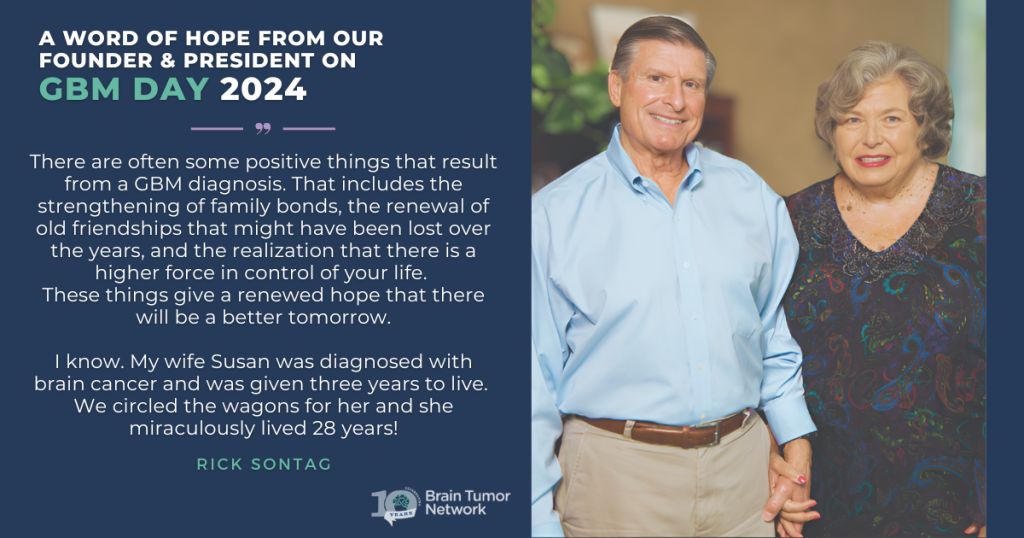
Navigating GBM: Insights from Our Neuro-Oncology Navigators
In recognition of GBM Awareness Day on July 17th, we highlighted the invaluable expertise and compassion of our Neuro-Oncology Navigation team across our social media channels. Their dedication to supporting patients and caregivers navigating the complexities of Glioblastoma Multiforme (GBM) is truly inspiring. Here, they share their insights and advice on various aspects of the GBM journey, from initial diagnosis to recurrence, caregiver support, finding hope, and more.
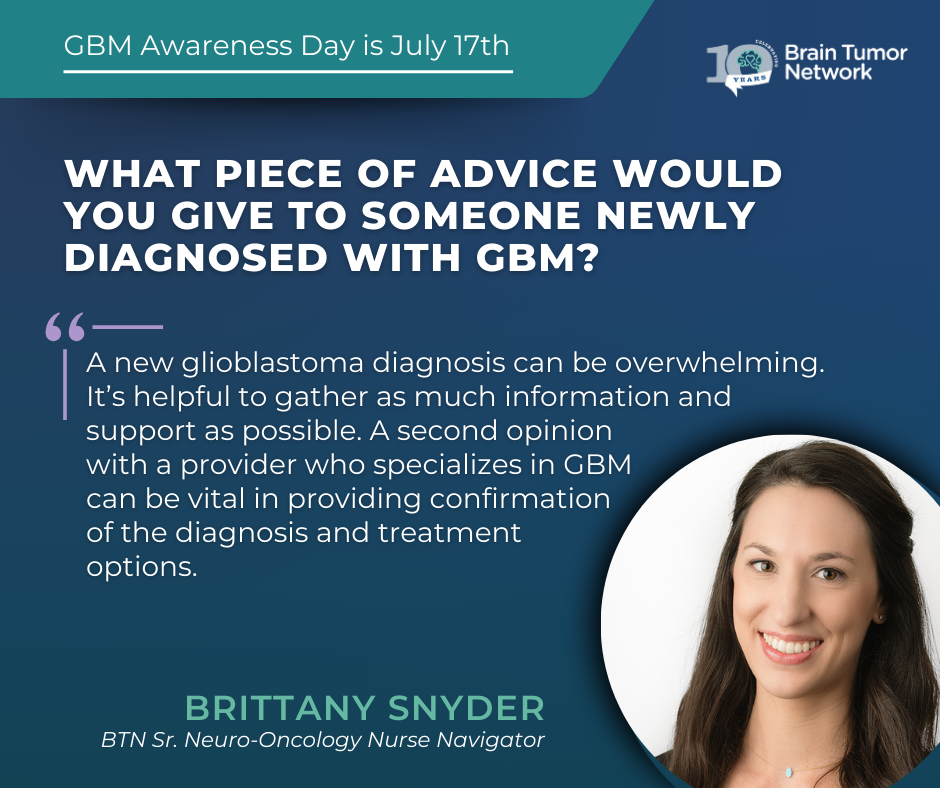
What insight would you give to someone newly diagnosed with GBM?
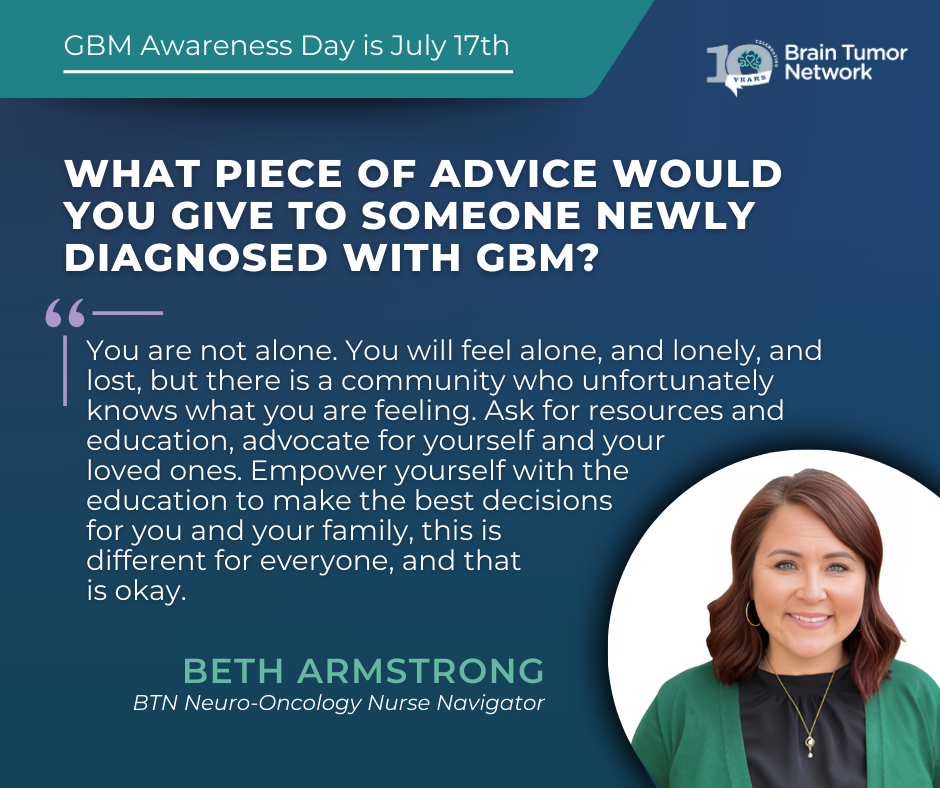
- I would say it’s completely understandable to feel overwhelmed, but you are not alone. Lean on your loved ones, connect with others for support, and focus on today. I think with any new diagnosis, it can be challenging to stay optimistic, and I think especially with a GBM diagnosis, it is important to celebrate every small victory and to embrace hope along the way.
- A diagnosis of new glioblastoma can be overwhelming. It’s helpful to gather as much information and support as possible. A second opinion with a provider who specializes in glioblastoma can be vital in providing confirmation of the diagnosis and treatment options.
- Contact BTN, remain hopeful, find a support system, ask for second opinions
- Write a list of questions down ahead of your appointments, ask them and write the answers down to refer to afterwards. Appointments can be overwhelming, so plan ahead to help you and your provider address all of your questions and concerns. Knowledge is power, so ask all the questions you have at each appointment.
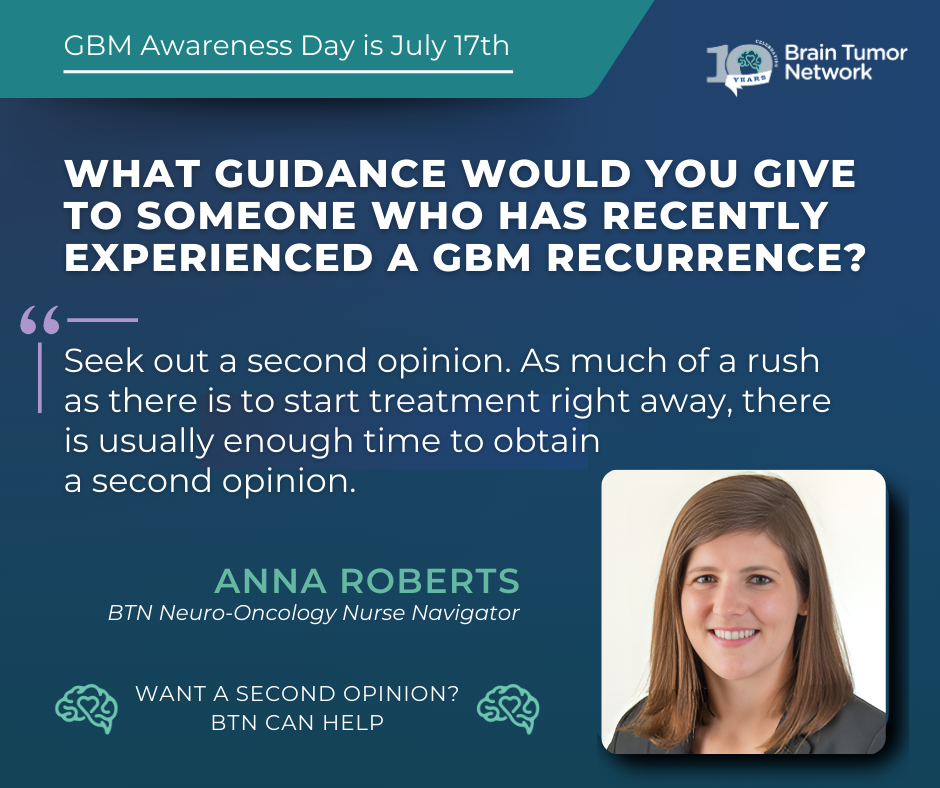
- Get a 2nd opinion. As much of a rush as there is to start treatment right away, there is usually enough time to obtain a 2nd opinion.
- Take your time to process this. You are starting a journey that no one should have to take, but remember you are not alone. Reach out to those for support whenever you are ready.
What guidance would you give to someone who has recently experienced a GBM recurrence?
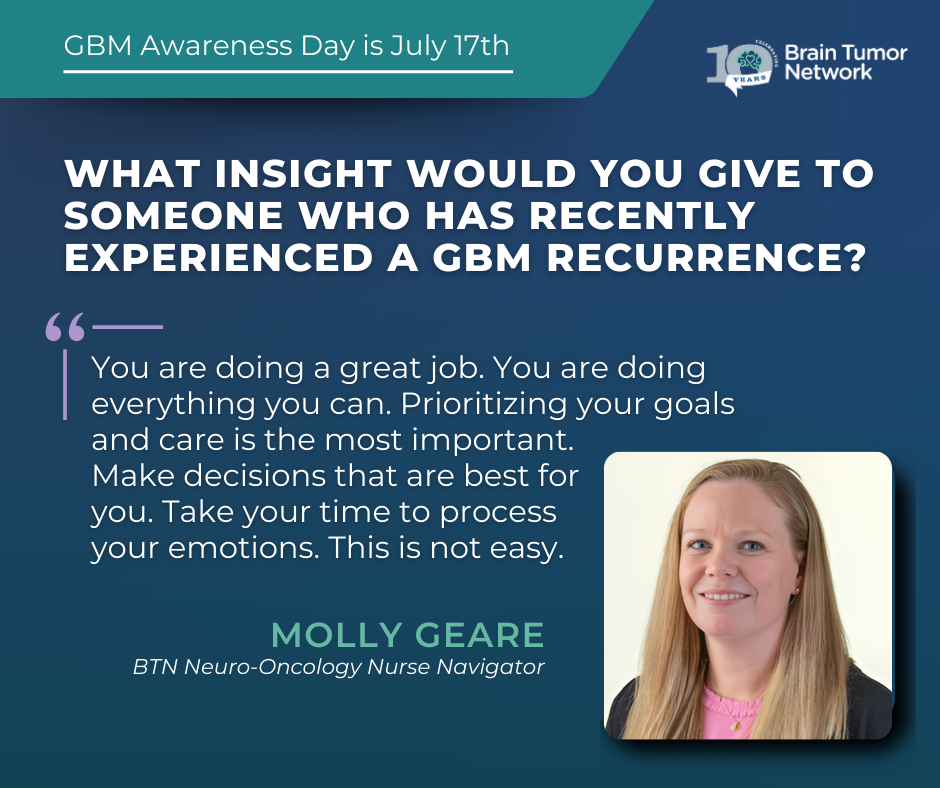
- Have honest conversations with your loved ones, and your care team. Talk about your goals and wishes to ensure your needs are being met. There are options, find support to help you explore those options, such a nurse navigator. Someone who will listen to you and understand your priorities.
- It’s okay to allow yourself to feel negative emotions. Give yourself time for this, but try not to stay there. Enjoy moments around you throughout your journey.
- Find a safe person to open up to. Someone you can speak your concerns, frustrations and fears to. Someone who will listen and support your inner feelings and thoughts. Be it a partner, friend or family member. Just someone who you can confide in openly.
- Reach out to Brain Tumor Network to discuss the possibility of a clinical trial search. Then, take the results to your medical team to see if a trial is right for you
- Give yourself the chance to work through the complex emotions that may come up. When you are ready, ask all the questions. Work with your medical team to come up with a plan of action that works for you. Lean on your navigator to identify your goals and understand all your treatment options. If you do not feel confident in a plan, seek a 2nd opinion to assess your options. Trust that you are in charge of your care.
What tip would you give to a caregiver supporting a loved one on their GBM journey?
- Surround yourself by others who are supportive, rather it be a support group, family, friends, online groups, social media platforms, or mentorships.
- Find time to take care of yourself and a mental health break.
- Your well-being matters, too. While you may be pouring yourself into your loved one, do not forget to take care of yourself. Resources such as counseling or support groups can be a wonderful outlet for caregivers seeking a community.
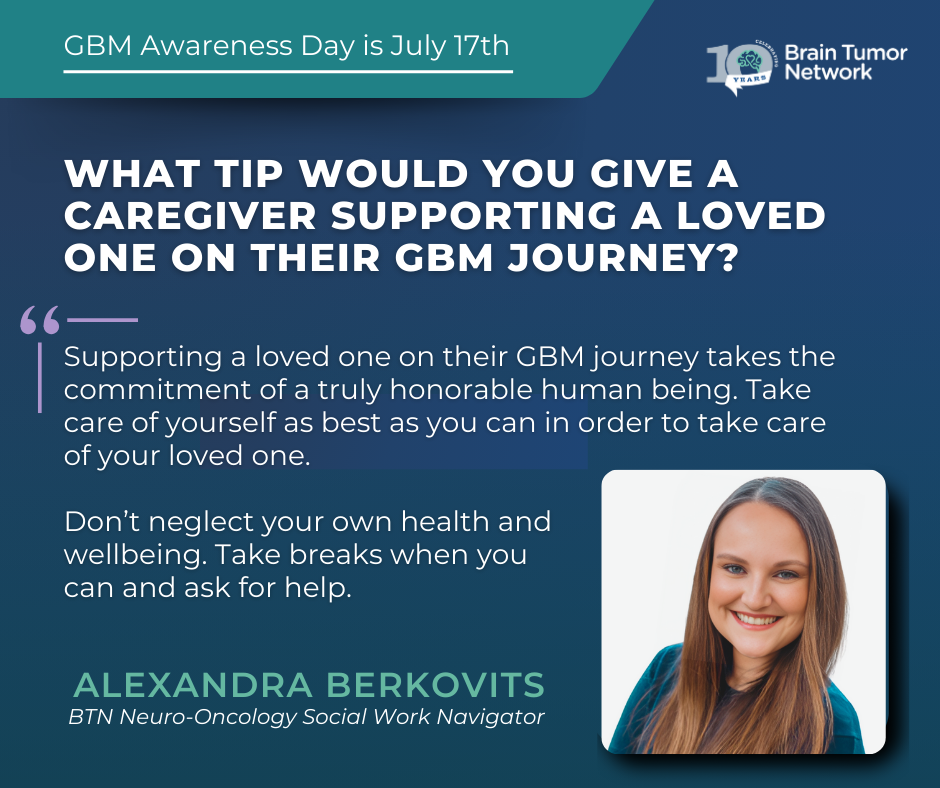
- Supporting a loved one on their GBM journey takes the commitment of a truly honorable human being. Take care of yourself as best as you can in order to take care of your loved one. Don’t neglect your own health and wellbeing. Take breaks when you can and ask for help.
- Take time for yourself. Caring for a loved one is overwhelming and all consuming at times. Be sure to put the oxygen on yourself or you will not be able to support your loved one in the way you truly want to. Your feelings matter, your needs matter – you matter just as much as your loved one with GBM.
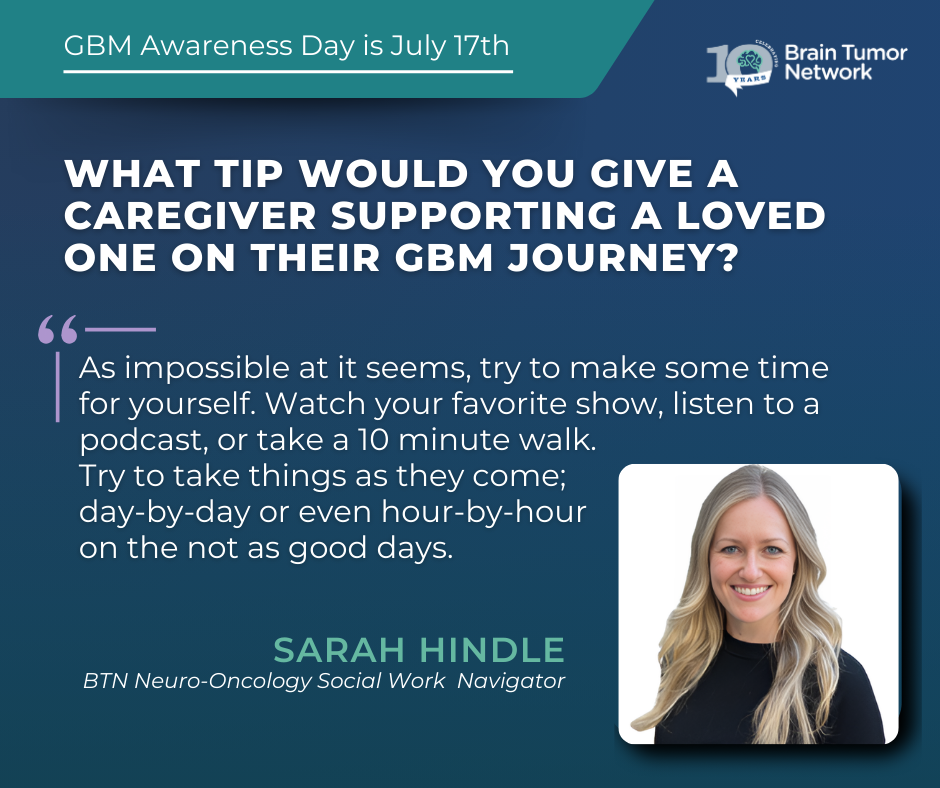
- Remember to take care of yourself. Give your loved one and yourself some grace. Your journey right now isn’t easy or fair, so it’s OK to have hard days. You are entitled to them. Try to do one small thing for yourself every day to help you cope.
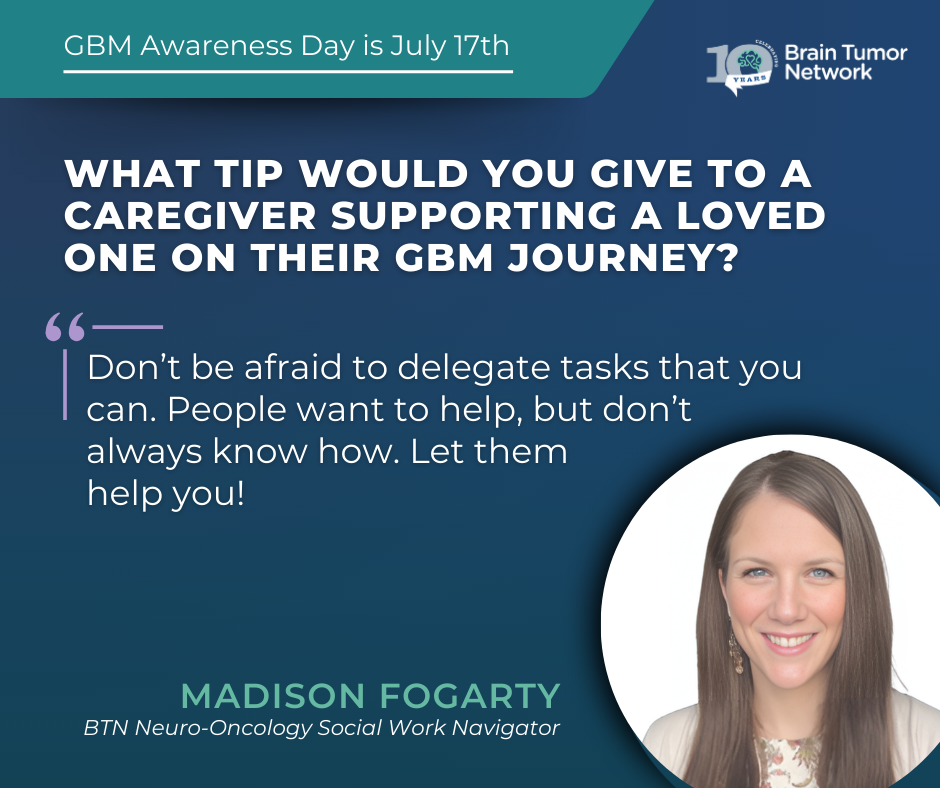
- Don’t be afraid to delegate tasks that you can. People want to help, but don’t always know how. Let them help you!
- Be sure to also care for yourself! This may be the hardest job you never wanted. Give yourself some grace and allow others to help and support you.
How can someone who is struggling with their GBM diagnosis find or retain hope?
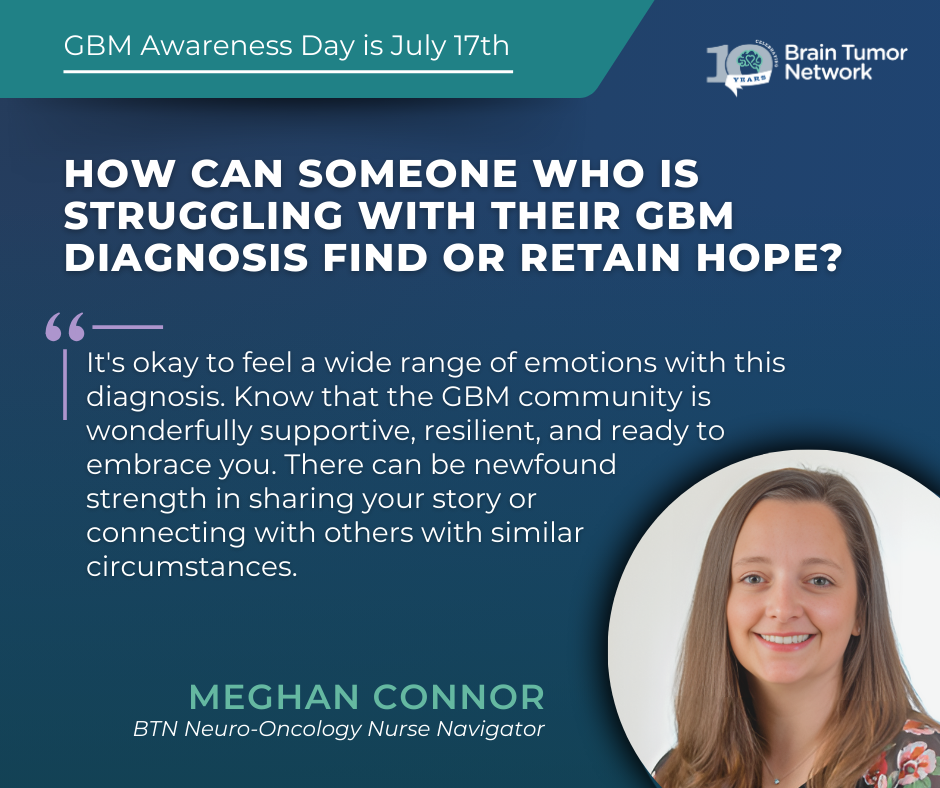
- Surround yourself by others who are supportive, rather it be a support group, family, friends, online groups, social media platforms, or mentorships.
- Get support from community whether in person or online. Connect with support groups
- There is always hope, but it can be difficult to remember this. If you are struggling, you might benefit from finding a peer mentor. This way, you can connect with someone who has been on a similar journey which might boost your outlook.
- Create short term goals and don’t get too far ahead in your thinking. Take it a day or week at a time so that life does not become more overwhelming all at once. Short term achievable goals can help in finding hope one step at a time.
- Find a mentor, support group, or brain tumor center/provider that instills hope– and of course connect with a navigator at BTN!
If you could share one piece of advice with the GBM community, what would it be?
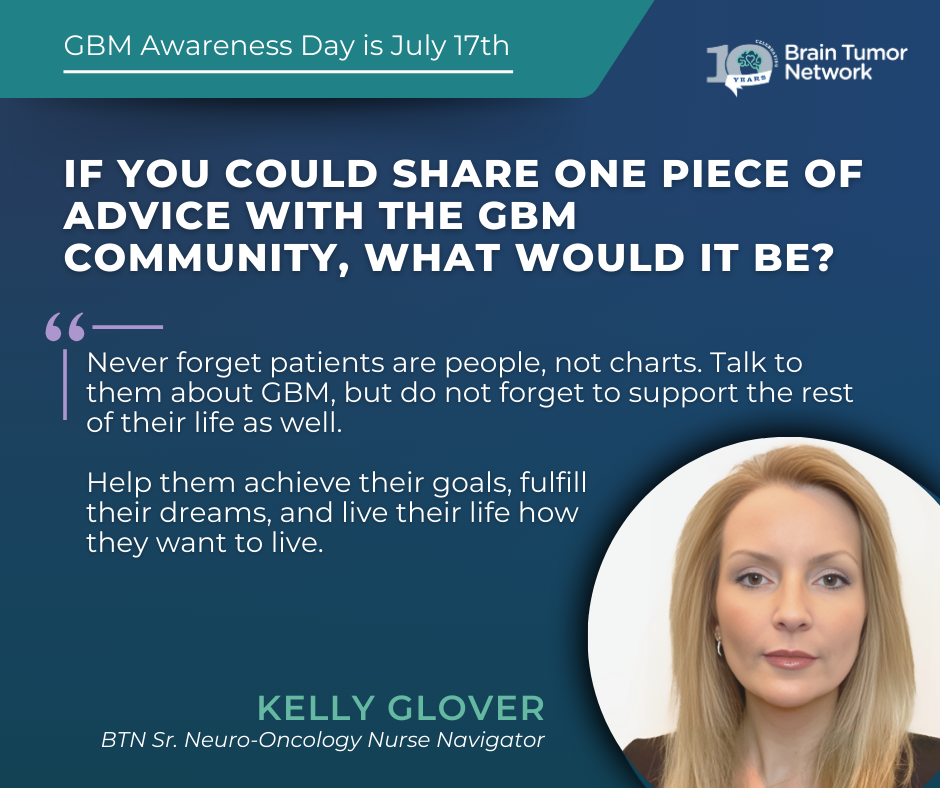
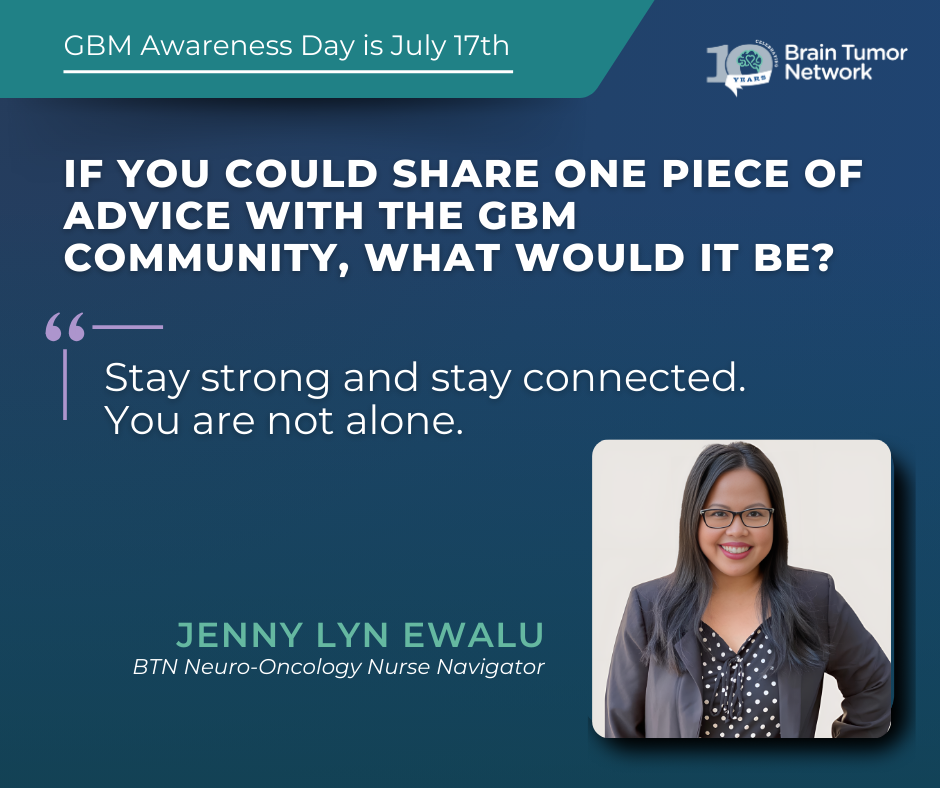
- Find support to help you explore options, to help you understand the diagnosis, and treatment options. Don’t feel like you need to do this alone, there are people who want to be there to help and support you
- Know you are not alone. There is a whole community of people who are here for you and want to help you on this journey however that best fits you. And to anyone who has ever walked this journey, I am forever humbled by your strength.
- Surround yourself with people who support and uplift you. Find a medical team you feel comfortable and confident with. Put your coping skills that have helped you your entire life, on steroids! Never lose hope and remember that there are scientists working day in and day out to improve and expand treatment options with the hopes to find a cure.
- Remember that every person’s journey with GBM is unique. You are never alone, and there are many people in this community who are ready to support you every step of the way.
- Stay up to date with all of the research being done to find a cure by following reputable sources.