The Critical Role of Neuro-Oncology Navigators
Navigating a brain tumor diagnosis can be an overwhelming experience, filled with complex decisions and emotional challenges. In the article “Guiding Lights,” published in the February 2025 issue of the Journal of Oncology Navigation & Survivorship, author and Brain Tumor Network Senior Nurse Navigator, Cassie Latino, MSN, RN, ONN-CG, sheds light on the pivotal role of patient navigation services in supporting individuals through this journey.
Aimed at educating the navigation community at large, this article offered the opportunity to highlight how organizations like the Brain Tumor Network provide personalized, high-touch navigation, offering both clinical guidance and emotional support to patients and their families. By emphasizing the importance of compassionate, one-on-one assistance, it is underscored how such services can empower patients, helping them make informed decisions and find hope amidst uncertainty.
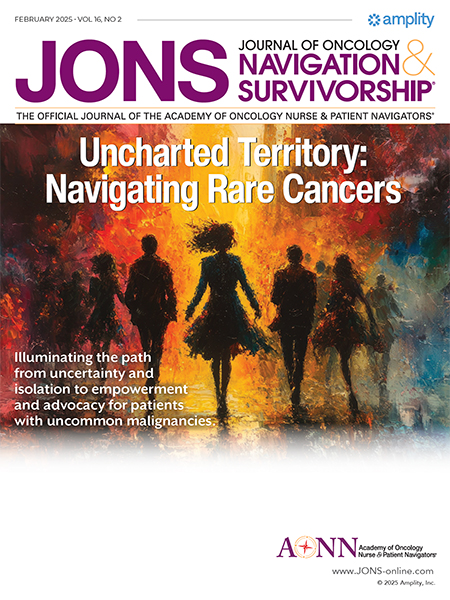
JONS, February 2025 Vol 16, No 2
Cassie Latino, MSN, RN, ONN-CG
Senior Nurse Navigator, Brain Tumor Network
Imagine hearing the news, “you have a brain tumor.” Five words that can cause your world to freeze and spiral all at once. As a senior nurse navigator within the neuro-oncology space, I have seen patients and their loved one’s face uncertainty and the need to make treatment decisions with little time to even process the life-altering news those 5 words brought them. Those 5 words can leave many feeling powerless, hopeless, and alone.
Now, imagine that you have a navigator to walk alongside you, advocate for your treatment goals, empower you to make educated decisions for your care, and support you and your loved ones throughout the ups and downs of this unanticipated life change. As most of you know, a navigator can serve as a light in the darkest of times. We understand what an honor and privilege it is to hold space for the difficult decisions, frustrations, fears, hopes, determination, and wins that come along throughout an individual’s treatment journey.
Let us dive deeper into the neuro-oncology navigator’s role as an advocate, compassionate supporter, educator, and crucial member of their multidisciplinary team. My hope for you as you read this is for you to gain a better understanding of the complex field of neuro-oncology navigation and to be reminded of simple tools you can utilize to support patients who face an unsolicited journey with a brain or spinal tumor.