At the heart of Brain Tumor Network are our founders, Rick and Susan Sontag. Their personal experience forever shaped what BTN stands for and how it serves those facing the unimaginable.
Our origin is not just a timeline of milestones; it is a story of love, resilience, and a promise made and kept against the hardest odds.
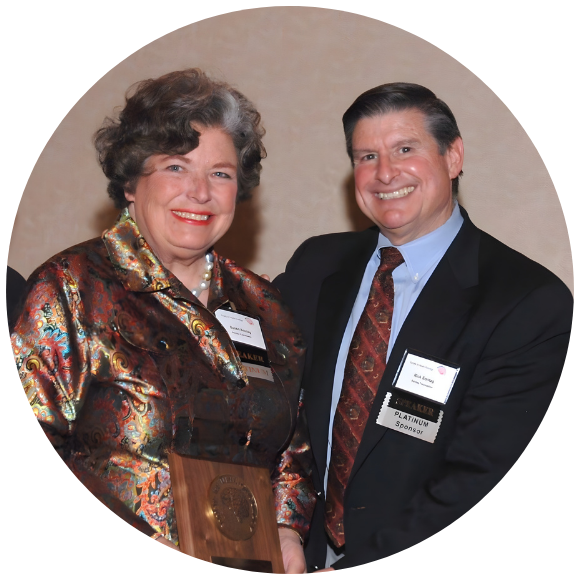
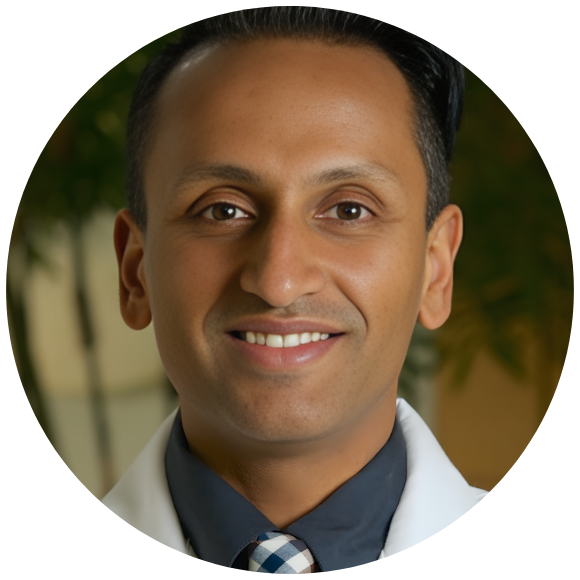
The Brain Tumor Network is Rick’s love letter to Susan.
Sriram Venneti MD PhD
Professor of Pathology and Pediatrics
Al and Robert Glick Family Research Professor
Scientific Research Director, Chad Carr Pediatric Brain Tumor Center
University of Michigan
Life Before Diagnosis
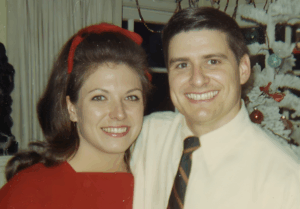 Rick and Susan Sontag’s journey began decades before brain cancer entered their lives, rooted in a lifelong partnership that started in Long Beach, California.
They met in 9th grade and went to high school in the same class where Susan graduated as the class salutatorian and was a gifted athlete. They graduated high school and ended up on the same college campus in Claremont, California, where they started dating. They married in 1965 just after both of them graduated.
Rick wanted to go to graduate school so he could get on a better career path. Susan had long wanted to go to law school, which at that time was very rare for women to do. But she decided to give up her law school dreams and support Rick in graduate school. So after graduation she trained to be a court reporter and was the main financial support for both of them until Rick graduated from grad school and got established.
Rick got his last graduate degree in 1968 and over the next 10 years he held three different marketing jobs with increasing responsibility at three different companies in the Western and Midwestern US. In 1979 he was terminated from his third job as part of a reorganization. At that point Rick and Susan had three young children. Susan had long ago given up court reporting and had become a stay at home Mom. After Rick was terminated he came home and told Susan he had had enough of the uncertainties of the corporate world. He wanted to buy a company and become an entrepreneur where he would have more control over his future. In spite of having three young children to raise, Susan was his strongest supporter and told him to “go for it”.
So without having much in savings Rick decided to try to buy a company. It took two years until finally in 1980 Rick and Susan purchased what became Unison Industries, a manufacturer of aircraft engine components. It was located right in their own backyard at the time, Northern Illinois. They made the purchase with the help of two venture capital companies and $8 million in debt. Over the next 15 years Rick built a management team which grew Unison from 80 to over 1500 employees, with sales to over 100 countries and no more debt. By the mid 1990’s Unison moved its headquarters to Florida. Rick and Susan moved there too. Their three children were starting to head to college. Life was good for them.
Susan’s Brain Cancer Journey
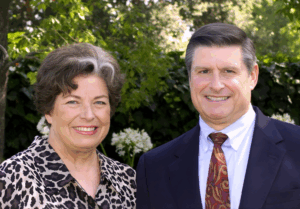 On June 24, 1994, everything changed. Susan had a stroke and was diagnosed with an anaplastic astrocytoma, an aggressive form of brain cancer. Doctors told Rick that Susan likely had 3 years to live. It was a shock.
Rick, shaken yet driven, refused to give up. His determination drove him to educate himself about brain tumors, available treatments, and radical therapies like clinical trials at a time when reliable information was hard to come by. Navigating a maze of medical jargon, uncertain prognoses, and the difficulty of treating a little-understood disease, he fought tirelessly to help Susan.
Eventually, Rick got Susan entered in an experimental trial involving harsh chemotherapy and heavy doses of radiation. It was a grueling regimen that miraculously stopped the tumor’s growth after two years. But the brain damage caused by the stroke, the tumor itself and its treatment was already done. After losing most of her cognitive capability with the stroke, Susan slowly continued to degrade mentally and physically with Rick by her side as her primary caregiver.
She lived 28 years after her stroke but was a shadow of her former intelligent, competent self when she died on their 57th wedding anniversary in 2022. But alongside that grueling grind came a deep awareness of how isolating and confusing the brain tumor journey could be. Rick and Susan experienced firsthand the gaps in support for families facing a brain tumor diagnosis and how difficult it was to find trusted guidance and resources. Rick knew there had to be a better way.
Turning Adversity Into Empowerment
 This experience awakened Rick’s resolve that no other family should face the confusion, fear, and isolation which they endured alone. In 2002, Rick and Susan sold Unison Industries to GE Aerospace. They used part of the proceeds from the sale to establish The Sontag Foundation, focusing on funding brain tumor research. Since 2002 the Sontag Foundation has grown into one of the largest private funders of brain tumor research in North America.
In 2004 The Sontag Foundation began supporting brain tumor patients by establishing a brain tumor support group in Northeast Florida. Rick and Susan personally attended these sessions for over a decade. As patients nationwide reached out to the Sontag Foundation for help in finding clinical trials, second opinions, or related information, it became clear that a dedicated, full-time national patient support organization was needed. So in 2014, Rick and Susan founded the Brain Tumor Network as an independent nonprofit sister organization to The Sontag Foundation.
Starting with one nurse navigator from Mayo Clinic, BTN has grown into a large team of specially trained nurse navigators, social worker navigators, and support staff, delivering free, personalized guidance to thousands of brain tumor patients and their families across the United States.
Building a Lasting Community
Susan’s journey was one of extraordinary courage, resilience, and love. Her passing in 2022 was a profound loss, but her light lives on in every family BTN supports.
Inspired by her remarkable spirit, we honor Susan each day by continuing the promise she and Rick made: that no one should ever have to face the challenges of a primary brain tumor alone. Her legacy is woven into every act of compassion, guidance, and hope we provide, ensuring that support, understanding, and community are at the heart of everything we do.
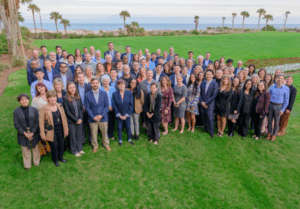
Brain Tumor Network staff join leaders, staff, and grantees from The Sontag Foundation at the annual Distinguished Scientist Award retreat in Florida.