Facing a glioblastoma diagnosis means making big decisions quickly. This guide breaks down what it is, how it’s treated, and how to get help along the way.
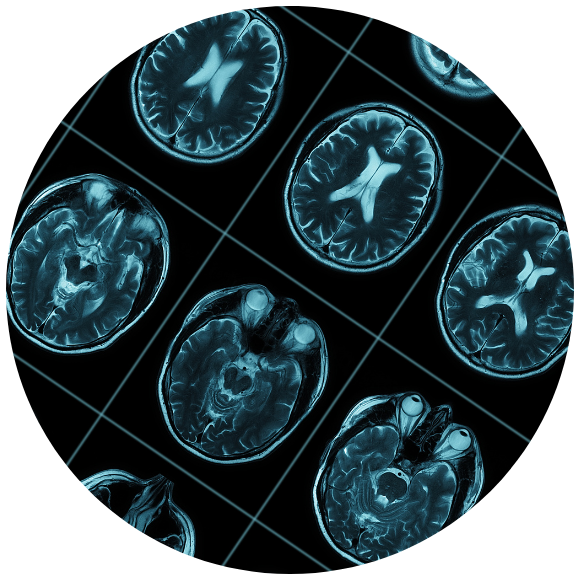
Glioblastoma is the most common and most aggressive malignant primary brain tumors in adults. It grows fast, resists treatment, and almost always returns even after surgery, radiation, and chemotherapy. This page explains what glioblastoma is, who it affects, the symptoms to watch for, how it is treated, and what survival looks like. The information draws on the American Cancer Society, peer-reviewed research, and the World Health Organization’s classification of brain tumors. It is meant to help patients and families ask informed questions of their care team.
What Is glioblastoma?
Glioblastoma, also called glioblastoma multiforme or GBM, is one of the most common and most aggressive type of malignant primary brain tumor.
A primary brain tumor is a tumor that starts in the brain rather than spreading there from somewhere else in the body (often referred to as “metastasis”). Glioblastoma begins in glial cells, the supporting cells of the brain, and it is the highest and most aggressive grade of glial tumor, known as grade 4. It grows quickly, and recurrence is nearly universal.
One thing that sets glioblastoma apart is how it grows. Rather than staying in one place, it sends thin, root-like extensions into the healthy brain tissue around it. These reach past what a scan can show or a surgeon can safely remove, so some tumor cells almost always stay behind. This is the main reason glioblastoma tends to return even after treatment that looks successful at first. The tumor also varies from one area to another, which is part of what “multiforme” refers to and part of what makes it hard to treat. Unlike many other cancers, glioblastoma rarely spreads beyond the brain and spinal cord.
How common is glioblastoma?
Brain cancers are rare overall, but glioblastoma is the most common malignant primary brain tumor in adults. It makes up about half of all malignant brain and central nervous system tumors.
In the United States in 2026, an estimated 24,740 people will be diagnosed with a malignant brain or other nervous system tumor, and about 18,350 people will die from one. Glioblastoma is the most common malignant type in this group, accounting for roughly half of malignant brain and central nervous system tumors.
Who gets glioblastoma?
Glioblastoma is diagnosed more often in men and most often around age 65, but brain cancer remains a serious cause of death in women, especially younger women.
Glioblastoma is diagnosed about 1.6 times as often in men as in women, and it is most often found around age 65. The risk rises with age. These patterns do not tell the whole story however. Brain and central nervous system cancer is among the ten leading causes of cancer death in the United States, and among women aged 20 to 39 it is the fourth leading cause of cancer death.

Glioblastoma itself is uncommon in children. Brain tumors as a whole are the leading cause of cancer death in people under 20, but the high-grade gliomas that occur in children are usually classified as different, pediatric-type tumors, not as glioblastoma.
Are you a caregiver supporting a loved one with a glioblastoma?
Brain Tumor Network is here for you too.
What are the symptoms of glioblastoma?
Common symptoms include seizures, headaches, and neurological problems such as changes in movement, speech, vision, memory, or thinking.
Because glioblastoma grows quickly, symptoms can appear suddenly and worsen over a short period. The specific symptoms depend on where the tumor sits in the brain. Managing seizures, headaches, and other neurological effects is part of treatment from the start.
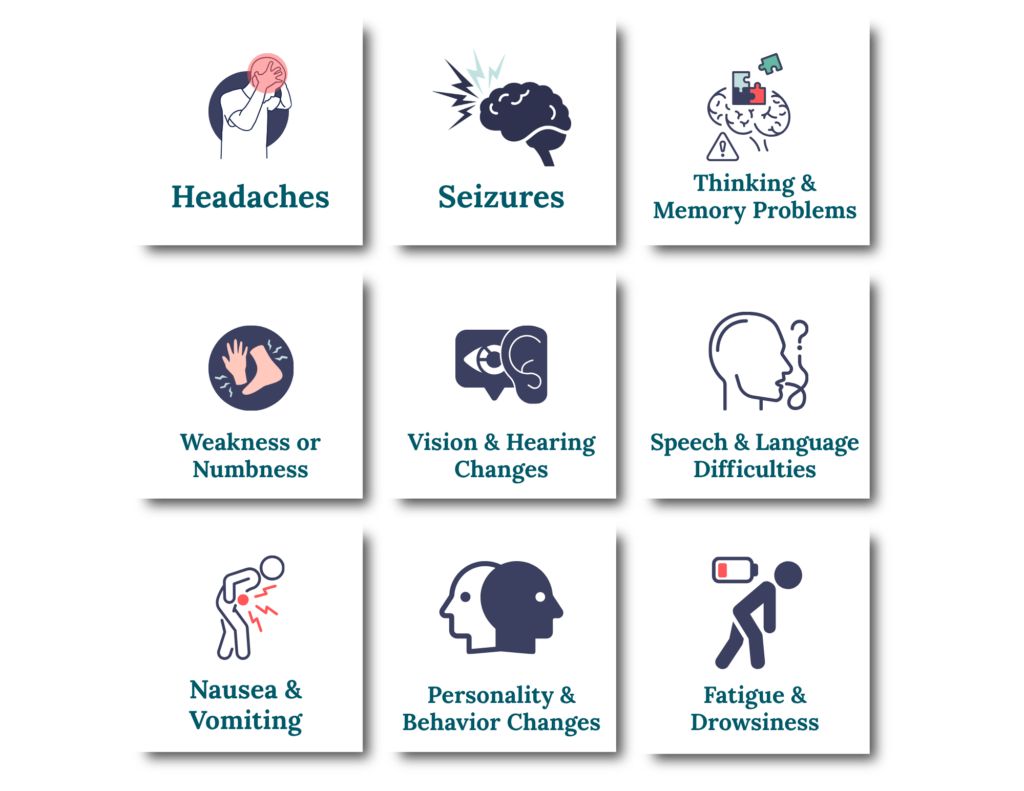
Read Now: Common Signs and Symptoms of a Brain Tumor
How is glioblastoma treated?
For most adults, treatment happens in three steps. First, surgeons remove as much of the tumor as they safely can. Then comes radiation, given together with a chemotherapy drug called temozolomide. After that, patients take temozolomide on its own for several more months.
This combination is known as the Stupp protocol, and it has been the standard of care for glioblastoma since 2005. After surgery, patients receive radiation with concurrent temozolomide, followed by maintenance temozolomide for 6-12 months. Treatment may look different for older adults or for people whose overall health makes intensive therapy harder to tolerate. A wearable device called Tumor Treating Fields, also known as Optune Gio, is now an available part of standard treatment for newly diagnosed glioblastoma. It works only while it is being worn, so it calls for keeping the device on most of the day. If your care team has not mentioned it, it is reasonable to ask whether it is an option for you.
Throughout treatment, managing symptoms and supporting the mental health of patients and caregivers are part of good care. Palliative care, which focuses on comfort and quality of life, can help from the time of diagnosis, not only late in the illness, and it can be provided alongside treatment aimed at the tumor.
Are clinical trials an option for glioblastoma?
Yes. Clinical trials are an important option in glioblastoma, and they are worth considering at many points in care, not only after standard treatments have been tried.
A clinical trial tests a new approach to treating a brain tumor under careful rules meant to keep participants safe. Many treatments used today were first studied in trials, and a trial can offer access to therapies that are not otherwise available to the public.
Timing matters. Trials can open at different points: at diagnosis or before surgery, in the short window after surgery but before radiation and chemotherapy, after initial treatment is complete, and again if the tumor returns. Because some options are only available early, it helps to ask about trials as soon as possible rather than waiting. Some treatments can also affect which trials you can join later. Bevacizumab (Avastin) and Tumor Treating Fields (Optune) are two examples. This does not mean turning down a treatment that could help you feel better or live longer. It means understanding the tradeoffs and timing, and deciding together with your care team. Brain Tumor Network can help you prepare tailored questions to bring to your providers so these choices are clear.
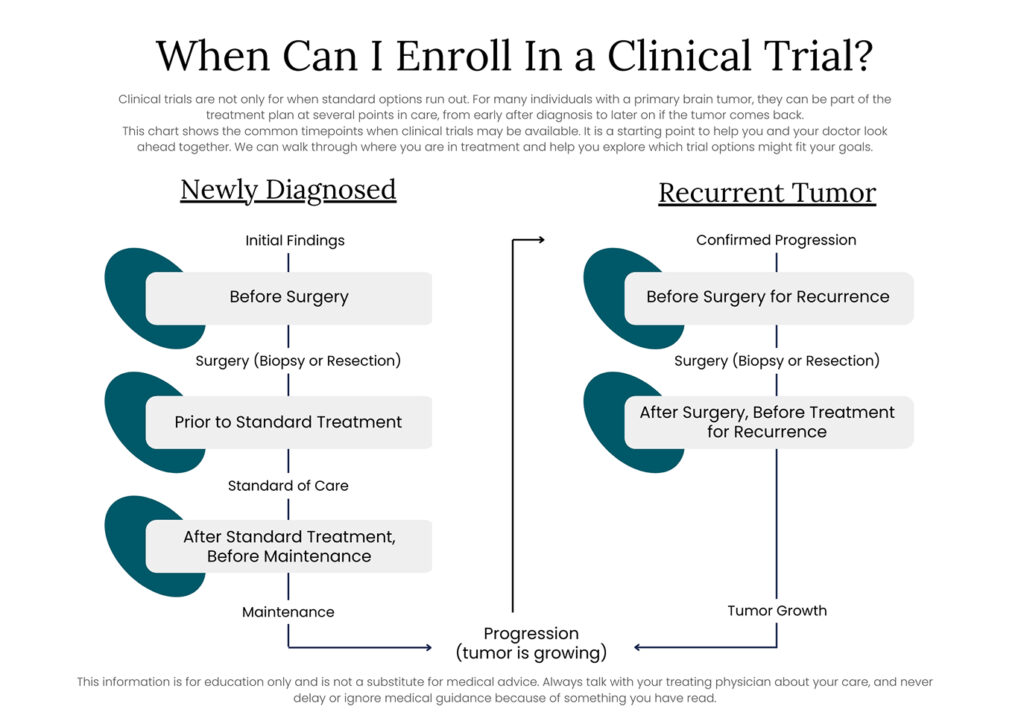
Biomarkers can open more doors, too. Some trials are designed for tumors with specific molecular features, so biomarker testing can reveal options you would not find otherwise. This is one more reason to know your results and share them with your care team.
Joining a trial is always a shared decision with your doctor. BTN’s nurse navigators run personalized, nationwide trial searches that go beyond ClinicalTrials.gov, check eligibility against your diagnosis and biomarkers, and give you a short, vetted list to review with your care team.
We make clinical trials easier
What do biomarkers like IDH and MGMT mean for glioblastoma?
Biomarkers are central to glioblastoma care. Two are checked in nearly every case: IDH status and MGMT promoter methylation.
IDH, short for isocitrate dehydrogenase, is a gene involved in how cells produce energy. A mutation in IDH marks a distinct, generally slower-growing kind of glioma. Glioblastoma is defined as an IDH-wildtype tumor, so IDH testing mainly confirms the diagnosis. It also reflects biology: IDH-wildtype tumors like glioblastoma tend to be more aggressive than IDH-mutant gliomas, which is part of why standard treatment is intensive.
MGMT is more directly tied to treatment. It is a gene that helps cells repair a specific kind of DNA damage. Temozolomide, the chemotherapy used in standard treatment, works by damaging the tumor’s DNA. When the MGMT gene is switched off, a change called promoter methylation, the tumor is less able to repair that damage, so temozolomide tends to work better. Glioblastomas with a methylated MGMT promoter generally respond better to standard chemoradiation than those without.
Two other markers come up often in glioblastoma. EGFR is a gene that can drive tumor growth when it is amplified or altered, and it is a target of several clinical trials. TERT promoter mutations help tumor cells keep dividing and are very common in glioblastoma. Both also help confirm the diagnosis. You may see still other terms on a report, such as TP53, PTEN, or changes in chromosomes 7 and 10. Your care team can explain which ones matter for your tumor.
Together, these markers help your care team understand the tumor and plan treatment. Your results, along with your age and how much of the tumor was removed, shape that plan. Ask your care team what your specific results mean for you.
Read Now: Understanding Brain Tumor Biomarkers
What is the survival rate for glioblastoma?
Median survival is about 12 to 15 months, and fewer than 1 in 10 patients are alive five years after diagnosis.
Survival varies from person to person based on age, biomarkers, and how much tumor can be removed during surgery. These figures are averages across many patients and are not a prediction for any single person. A care team can give context specific to an individual diagnosis.
What happens if glioblastoma comes back?
Glioblastoma almost always returns. When it does, treatment is tailored to the person, and options still exist.
After recurrence, median survival is around six months, though this varies widely. There is no single standard for recurrent glioblastoma. Options may include clinical trials, repeat surgery, another course of radiation, chemotherapy, or bevacizumab (Avastin) in certain settings. Managing symptoms and protecting quality of life become central at this stage. Many patients and families look into clinical trials and palliative care when standard treatments have been exhausted.
Read Now: The First 5 Actions After a Brain Tumor Recurrence
What new glioblastoma treatments are being studied?
Researchers are testing many new approaches in clinical trials, though most are not yet standard treatment.
Studies are looking at cancer vaccines, immune checkpoint inhibitors, cell therapies such as CAR T-cell and NK-cell treatments, oncolytic virus therapy, targeted drugs, new drug-delivery methods, and device-based approaches like laser interstitial thermal therapy and focused ultrasound. Results so far are mixed, and some large trials have not improved survival. Most of these are available only through a clinical trial rather than as routine care. Ongoing research and trial enrollment remain important to improving outcomes for glioblastoma.
Could you use free, individualized support for your glioblastoma?
Connect with a BTN navigator today
Sources:
- American Cancer Society. Cancer Facts & Figures 2026. Atlanta: American Cancer Society; 2026.
- CBTRUS Statistical Report… 2018-2022. Neuro-Oncology. 2025;27(Suppl 4):iv1-iv111.
- Louis DN, Perry A, Wesseling P, et al. The 2021 WHO Classification of Tumors of the Central Nervous System: a summary. Neuro-Oncology. 2021;23(8):1231-1251.
- Kovacs A, et al. Glioblastoma: Clinical Presentation, Multidisciplinary Management, and Long-Term Outcomes. Cancers. 2025;17(1):146.
- Grochans S, et al. Epidemiology of Glioblastoma Multiforme – Literature Review. Cancers. 2022;14(10):2412.
- Marques-Torrejon MA, et al. Glioblastoma Therapy: Past, Present and Future. International Journal of Molecular Sciences. 2024;25(5):2529.
- Verdugo E, et al. An update on the molecular biology of glioblastoma, with clinical implications and progress in its treatment. Cancer Communications. 2022;42:1083-1111.
Related Posts

Dr. Roxana Dronca Joins BTN Board
Meet Dr. Roxana Dronca, the newest member of Brain Tumor Network’s Board of Directors and a nationally recognized oncology leader.